By A. L. Grant, Chicago Times Magazine –
May 14, 2026
In an era when technology evolves faster than policy, Illinois has taken an important step toward safeguarding the privacy of its youngest residents. State Senator Karina Villa’s advancement of Senate Bill 415 — part of the Senate’s broader AI protection package — represents a thoughtful, forward‑looking approach to balancing innovation with responsibility.
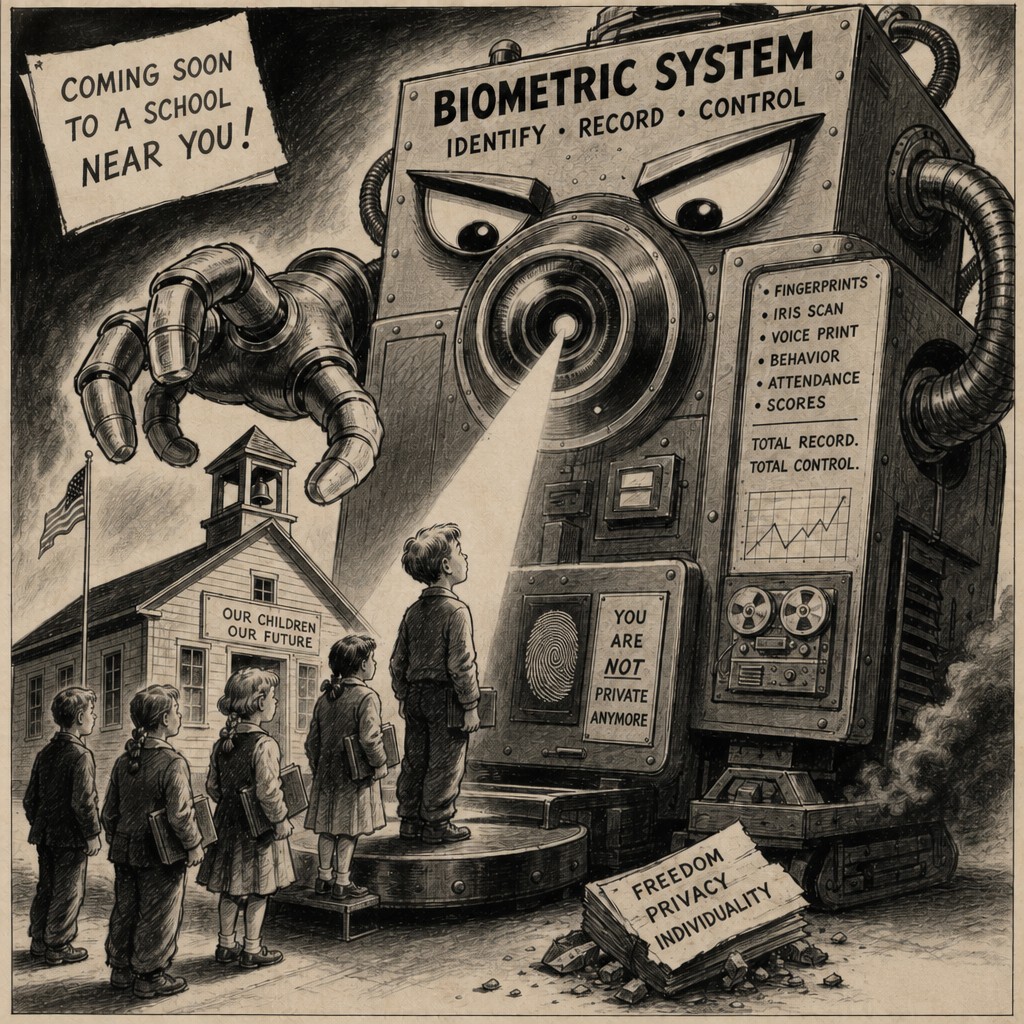
For years, artificial intelligence and biometric systems have quietly expanded into everyday life. Schools, often eager to streamline operations or adopt cutting‑edge tools, have increasingly become testing grounds for these technologies. But as Senator Villa rightly emphasizes, the classroom should never become a laboratory for unregulated data collection.
Senate Bill 415 draws a clear line. It prohibits school districts from acquiring or using biometric systems unless they serve a legitimate instructional purpose. That standard matters. It ensures that technology in schools remains a tool for learning, not surveillance.
Villa also highlights a critical equity issue. “The use of biometric systems, like facial recognition, has already led to discrimination that disproportionately impacts Black and Brown students,” she noted. This is not hypothetical — national studies have repeatedly shown that facial recognition systems can misidentify students of color at higher rates, compounding existing disparities. By pressing pause on these systems until privacy and fairness concerns are addressed, the bill protects vulnerable students from becoming unintended casualties of technological enthusiasm.
The measure’s passage through the Senate Executive Committee signals growing recognition that AI in education must be handled with care. Illinois is not rejecting innovation; it is insisting that innovation serve students, not the other way around.
If I may put my two cents in, after all this is an editorial, Senate Bill 415 is a strong start — but Illinois should take the next logical step: a full ban on biometric systems in educational settings. Schools are places of learning, not laboratories for data extraction. Children should not have to trade their bodily identifiers for access to lunch, library books, or classroom materials. Nor should families be forced to trust that third‑party vendors will safeguard data that, if breached, could follow a child for life.
Senator Villa’s leadership on this issue reflects a broader truth: protecting children’s data is not a partisan stance — it is a moral one. As schools navigate the digital frontier, this legislation ensures that privacy and transparency remain at the center of the conversation.
If enacted, Senate Bill 415 will stand as a model for other states grappling with the same questions. It is a reminder that progress is strongest when it is paired with protection, and that the well‑being of students must always come first.