By Chicago Times Magazine –
May 9, 2026
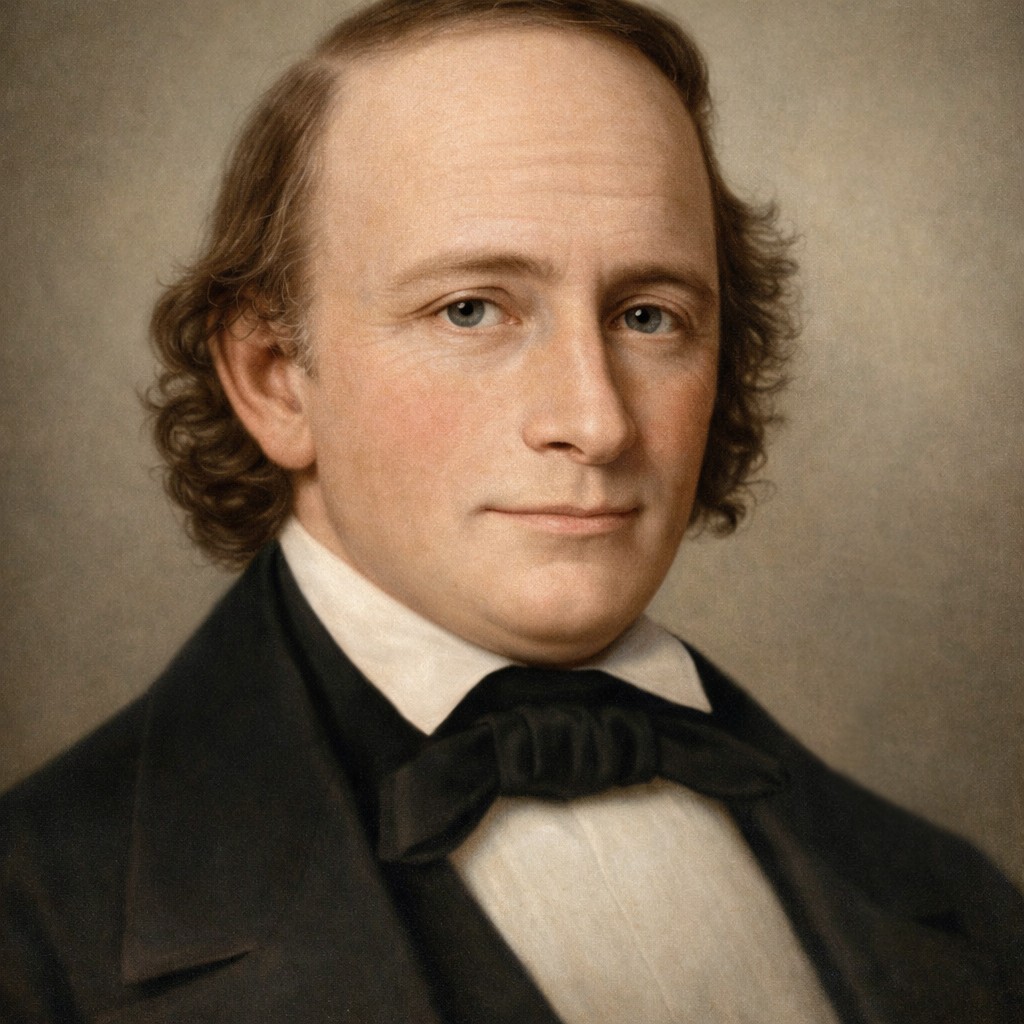
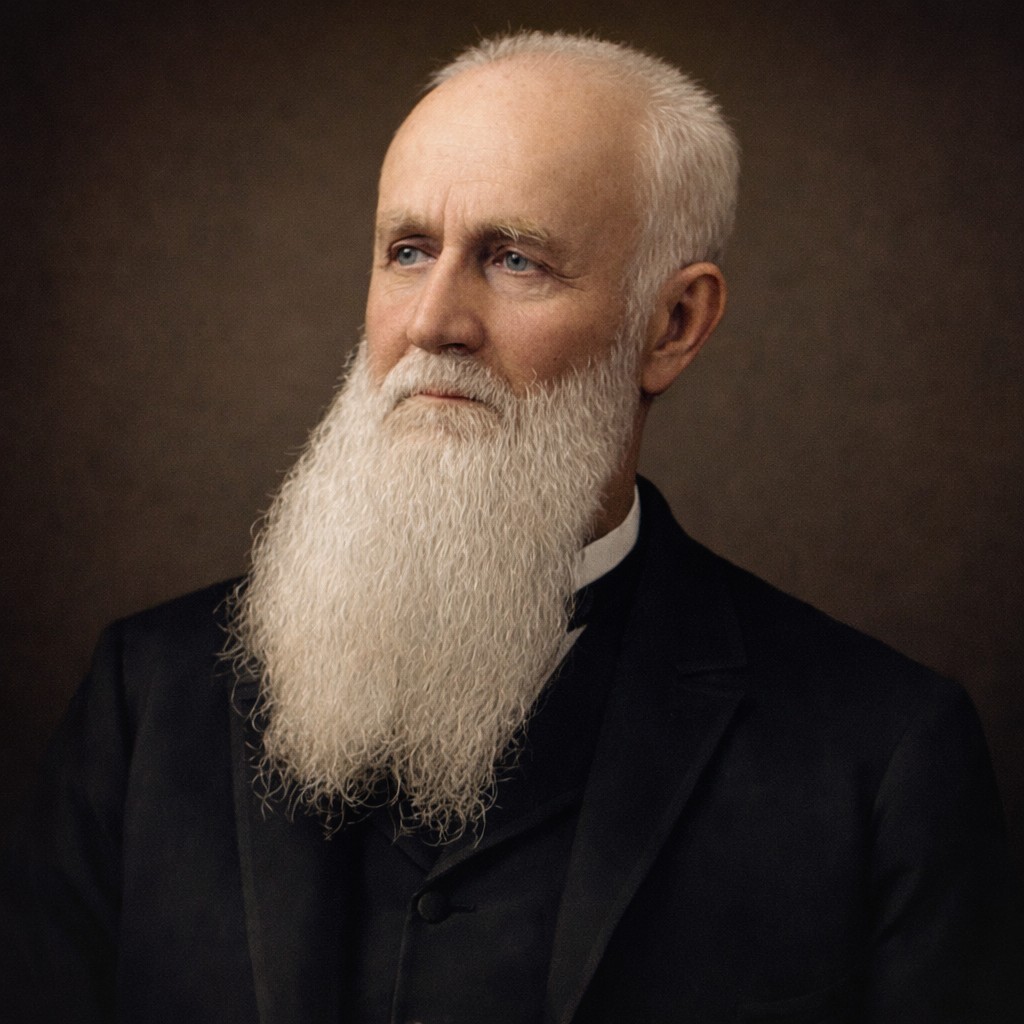
Alson Smith Sherman stands as one of the most quietly influential figures in Chicago’s early history, a man whose name rarely surfaces in modern conversations yet whose work helped shape the foundations of the city. Serving as Chicago’s eighth mayor from 1844 to 1845, Sherman governed at a time when the city was still more frontier settlement than metropolis. His life reflects the improvisational, hands‑on leadership that early Chicago demanded: a blend of builder, firefighter, entrepreneur, and civic organizer. Though overshadowed by later mayors who presided over explosive growth or political spectacle, Sherman’s contributions were essential to transforming Chicago from a muddy outpost into a functioning urban community.
Born on April 21, 1811, in Barre, Vermont, Sherman grew up in a region defined by hard labor and self‑reliance. Like many young men of his generation, he was drawn westward by the promise of opportunity. When he arrived in Chicago in the 1830s, the settlement was little more than a scattering of wooden buildings, unpaved streets, and a population numbering in the hundreds. It was a place where a person could reinvent himself daily, and Sherman did exactly that. He built the city’s first sawmill, a crucial enterprise in a town where nearly every structure depended on lumber. He also became Chicago’s first iceman, harvesting and selling ice at a time when refrigeration was both a luxury and a necessity. These early ventures reveal a man who understood the city’s needs before the city fully understood itself. Chicago needed lumber. Chicago needed ice. Chicago needed people willing to do the unglamorous work of building a functioning community. Sherman was one of them.
Before entering politics, Sherman served as chief of Chicago’s fire department for three years. This was no ceremonial role. Chicago’s early buildings were tinderboxes, and fires were a constant threat. The city had no professional fire brigade, no modern equipment, and no standardized procedures. Sherman’s leadership helped bring order to a chaotic system and laid the groundwork for the more sophisticated fire services that would emerge later. His experience as fire chief would shape his mayoral priorities, particularly his focus on acquiring the city’s first dedicated firefighting equipment.
Sherman entered the mayoral race of 1844 under unusual circumstances. The initial election that year had been invalidated due to allegations of illegal proceedings and fraud, a reminder that Chicago politics has always had a flair for the dramatic. When the election was rerun, Sherman ran as an Independent Democrat, facing incumbent Democrat Augustus Garrett and Liberty Party candidate Henry Smith. He won with just over half the vote, a narrow but decisive victory. His success reflected a city still experimenting with political identity. Party lines were fluid, and voters were more concerned with competence than ideology. Sherman’s reputation as a builder and organizer likely helped him stand out.
His mayoral term lasted less than a year, but it was marked by practical achievements. Most notably, he oversaw the purchase of Chicago’s first piece of fire‑fighting equipment, a milestone that would have lasting impact on the city’s safety and resilience. He also appointed Denis Swenie as fire chief, a figure who would later become one of the most influential leaders in the history of Chicago’s fire services. Sherman’s administration was not defined by sweeping political reforms or grand visions. Instead, it was characterized by incremental improvements, the kind that make a young city more livable and more stable. His approach was pragmatic, grounded in the belief that Chicago needed infrastructure before it needed ideology.
After leaving the mayor’s office, Sherman remained active in public life. He won a special election in 1849 to replace E.H. Chapin on the Chicago City Council, representing the Third Ward, and won a full term the following year. In 1850, he became one of the original trustees of Northwestern University, helping to shape an institution that would become one of the most prestigious in the Midwest. Sherman’s civic involvement extended beyond Chicago. In 1856, he moved to Waukegan, Illinois, where he continued to invest in local development. In the 1870s, when workers digging a canal in Lemont uncovered a deposit of Athens marble, Sherman played a key role in developing the quarry. This marble would later be used in buildings across the region, adding another layer to his legacy as a builder.
Sherman’s personal life was as expansive as his civic one. He married Aurora Abbott in 1833, and together they had fourteen children, a testament to both the era’s family norms and the Shermans’ resilience. Family life in early Chicago was not easy. Disease, fire, and harsh winters posed constant threats. Yet the Shermans endured, contributing to the social fabric of a city still finding its identity. Aurora died nearly twenty years before her husband, who outlived her and many of their children. His long life allowed him to witness Chicago’s transformation from frontier settlement to booming metropolis, a transformation he had helped set in motion.
Alson Smith Sherman died on September 22, 1903, in Waukegan at the age of ninety‑two. He was buried in Oakwood Cemetery, a quiet resting place far from the bustling city he helped build. His death was noted in the Chicago Daily Tribune, but his legacy soon faded from public memory. Chicago’s explosive growth in the late nineteenth and early twentieth centuries produced larger‑than‑life figures who overshadowed the modest, practical leaders of earlier decades. Yet Sherman’s contributions remain embedded in the city’s DNA. He helped build its early infrastructure, professionalize its fire services, and establish institutions that endure to this day.
Sherman’s story resonates because it reflects a kind of leadership that is often overlooked: the leadership of builders, not rhetoricians. He was not a political showman. He did not preside over a booming metropolis or a moment of national attention. Instead, he governed a fragile, muddy, combustible young city that needed order, equipment, and steady hands. Chicago’s later triumphs—the skyscrapers, the railroads, the cultural institutions—were built on foundations laid by people like Sherman. His sawmill provided the lumber. His firefighting reforms saved lives and property. His civic involvement helped shape educational and economic institutions. In a time when political leadership is often judged by spectacle, Sherman’s quiet competence offers a reminder that cities are built not only by visionaries but by practical problem‑solvers.
Alson Smith Sherman may never become a household name, even among Chicagoans. But his life tells a story worth remembering: the story of a man who helped transform a frontier settlement into a functioning city. His legacy is not found in monuments or grand speeches but in the everyday structures and systems that make urban life possible. Chicago’s history is filled with dramatic personalities and defining moments. Sherman represents something different—a steady, industrious figure whose contributions were essential precisely because they were unglamorous. He built the basics. And without the basics, nothing else stands.