By Chicago Times Magazine –
May 10, 2026
The streets of Chicago possess a character all their own, but on the morning of May the tenth they seemed to speak with unusual vigor. The clang of the streetcars, the rumble of delivery wagons, the brisk footfall of clerks hurrying from the elevated stations — all combined into a confident urban chorus that suggested a city in excellent health. It was into this lively din that I stepped, reporter notebook in hand, to accompany Mr. Albert Brown on his day’s journey.
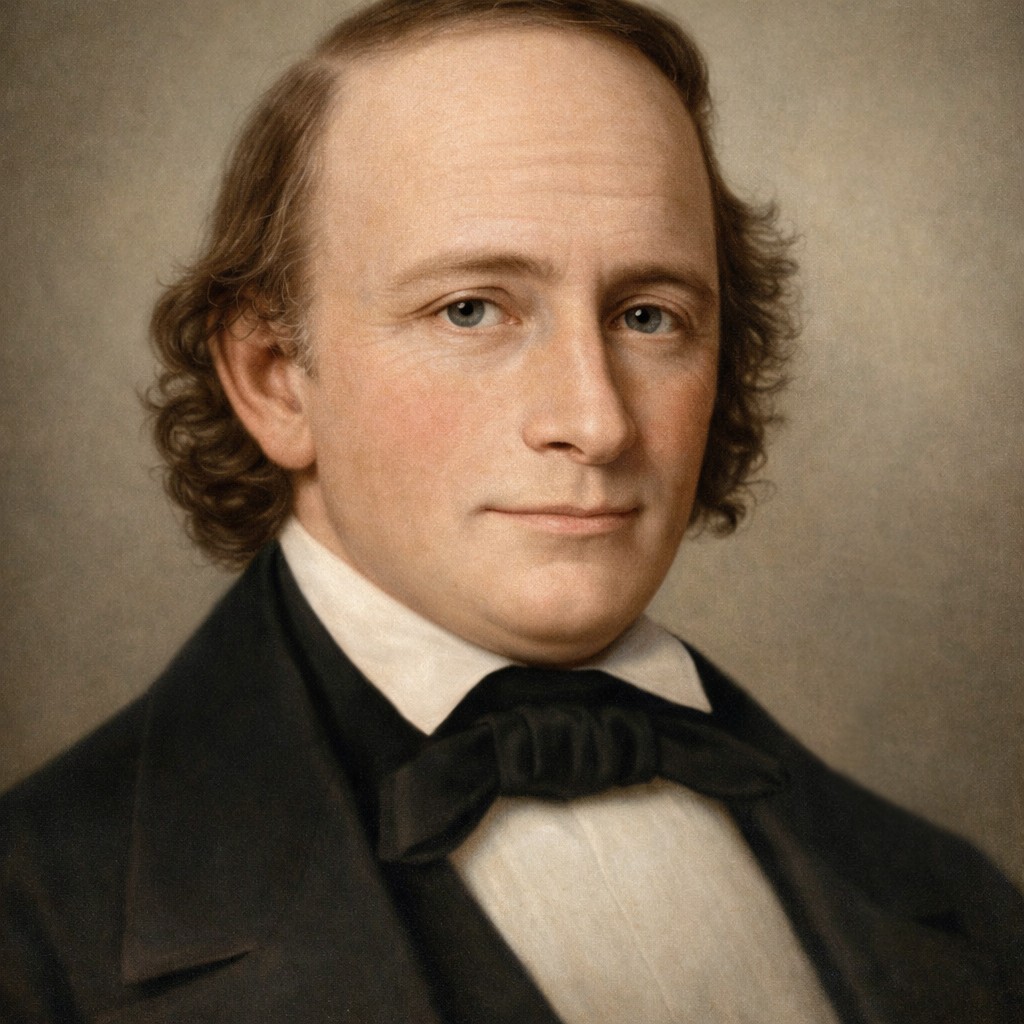
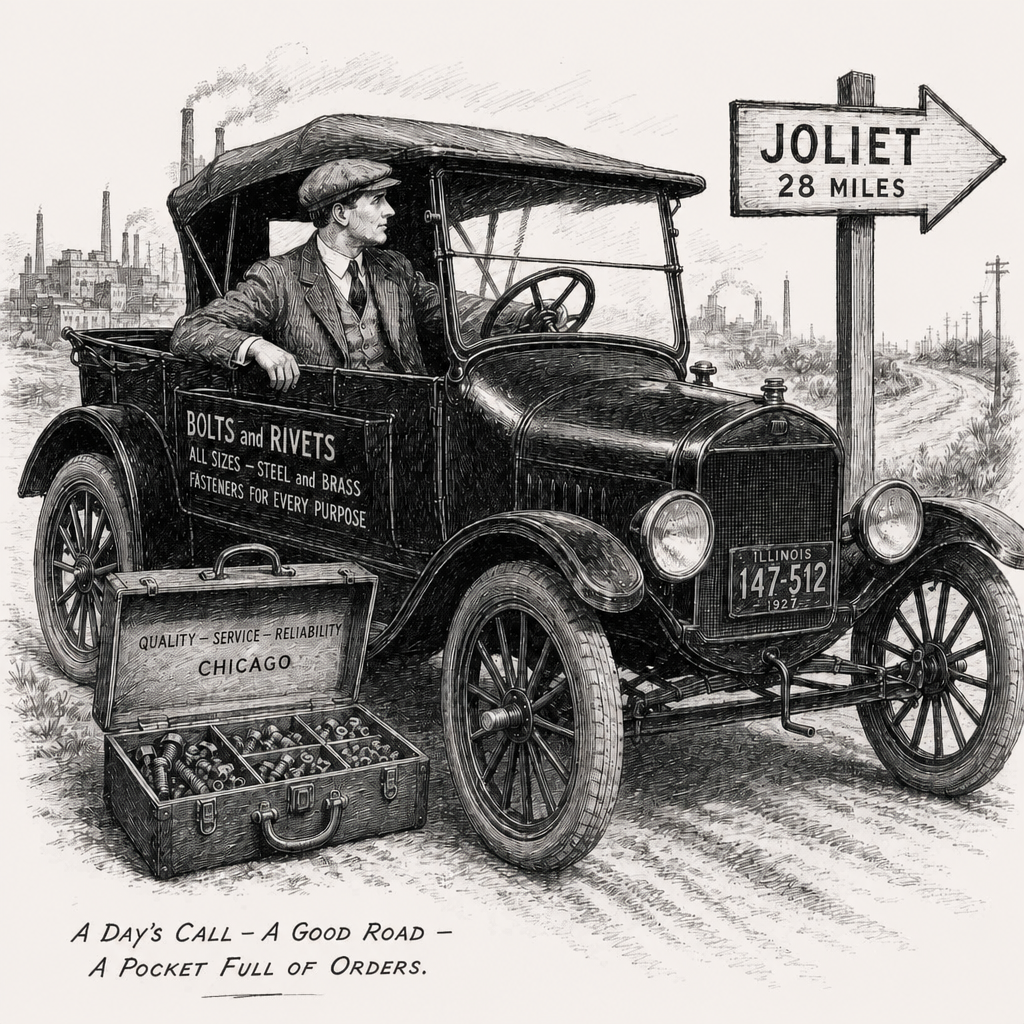
Brown, a salesman of industrial fasteners — bolts, rivets, screws, and the other modest instruments upon which the machinery of modern America depends — greeted me with a genial nod. His Ford Model T touring car stood ready at the curb, its engine ticking with the promise of the miles ahead. “Joliet today,” he said, settling behind the wheel. “A man can do honest business in a town that works as hard as that one.”
We set off southward through the Loop, passing the rising steel frame of the Pittsfield Building, nearly complete and already casting its long shadow across Washington Street. Newsboys shouted the latest of Mayor Thompson’s political theatrics, while the radios in shop windows carried WGN’s morning reports — farm prices, market chatter, and the steady drumbeat of news concerning a young aviator named Lindbergh, who was preparing for a daring transatlantic attempt later in the month. Brown only smiled. “Flying’s fine for dreamers,” he said. “But I’ve a 2:30 appointment at Illinois Steel.”
Beyond the city limits, the noise softened, and the Dixie Highway unfurled before us like a dependable ribbon of progress. The pavement, good by the standards of 1927, allowed the Model T to settle into a steady, contented hum. Farmhouses dotted the landscape, their laundry snapping in the breeze. The fields, still soft from the month’s rains, exhaled the rich scent of damp earth. Billboards rose along the roadside like sentinels of the motor age — Standard Oil urging motorists to Drive with Confidence, Clicquot Club Ginger Ale promising refreshment For Motorists on the Move, and, most curiously, a bold advertisement for Stateville Penitentiary, the new circular prison outside Joliet, heralded as a marvel of modern design. Brown regarded the signs with the mild amusement of a man who has seen them a hundred times before. “The road teaches you a great deal,” he remarked. “About towns, about people, about the way this state ties itself together.” The miles passed easily beneath us.
By early afternoon, the smokestacks of Joliet rose ahead, marking the city long before its streets came into view. Joliet is a place that works for a living. The Illinois Steel Company dominates the skyline, its furnaces glowing day and night, producing rails, wire, and structural steel for a nation that seems determined to build upward and outward in equal measure. We made our rounds: a foreman at the mill, a purchasing clerk at a machine shop, a quarry supervisor whose handshake could have cracked a walnut. Brown knew them all — their names, their habits, their preferences in both hardware and conversation. Salesmanship, I realized, is not merely the exchange of goods but the cultivation of trust.
Near the limestone quarries, the ground trembled with the thump of blasting. Joliet’s famed Lemont limestone has built courthouses, churches, and skyscrapers across the Midwest, and the dust of it clung to the boots of every man who labored near the pits. As we walked between appointments, a faint but spirited brass melody drifted across the street. It came from Joliet Township High School, where the band under the direction of Mr. McAllister was rehearsing. Already earning national recognition, the ensemble has become a point of civic pride. Brown paused, tipping his hat toward the sound. “Fine band,” he said. “A town with music in it can’t go wrong.”
By the time our last call was completed, the sun was lowering over the prairie. We stopped at a roadside stand for sandwiches wrapped in wax paper, then turned the Model T northward. The evening air was cool and agreeable. Headlights glowed like fireflies along the highway. Freight trains clattered along the Rock Island line, and farmhouses lit their kerosene lamps one by one as the prairie darkened around them. Brown drove with the quiet satisfaction of a man whose order book was heavier than it had been that morning. “Another day’s work,” he said. “Another road traveled.”
And as the lights of Chicago reappeared on the horizon, I found myself reflecting on the quiet dignity of the salesman’s road — a road that binds city to town, industry to industry, and man to man, in a state that in 1927 is moving fast and dreaming even faster.