By Chicago Times Magazine –
January 15, 2026
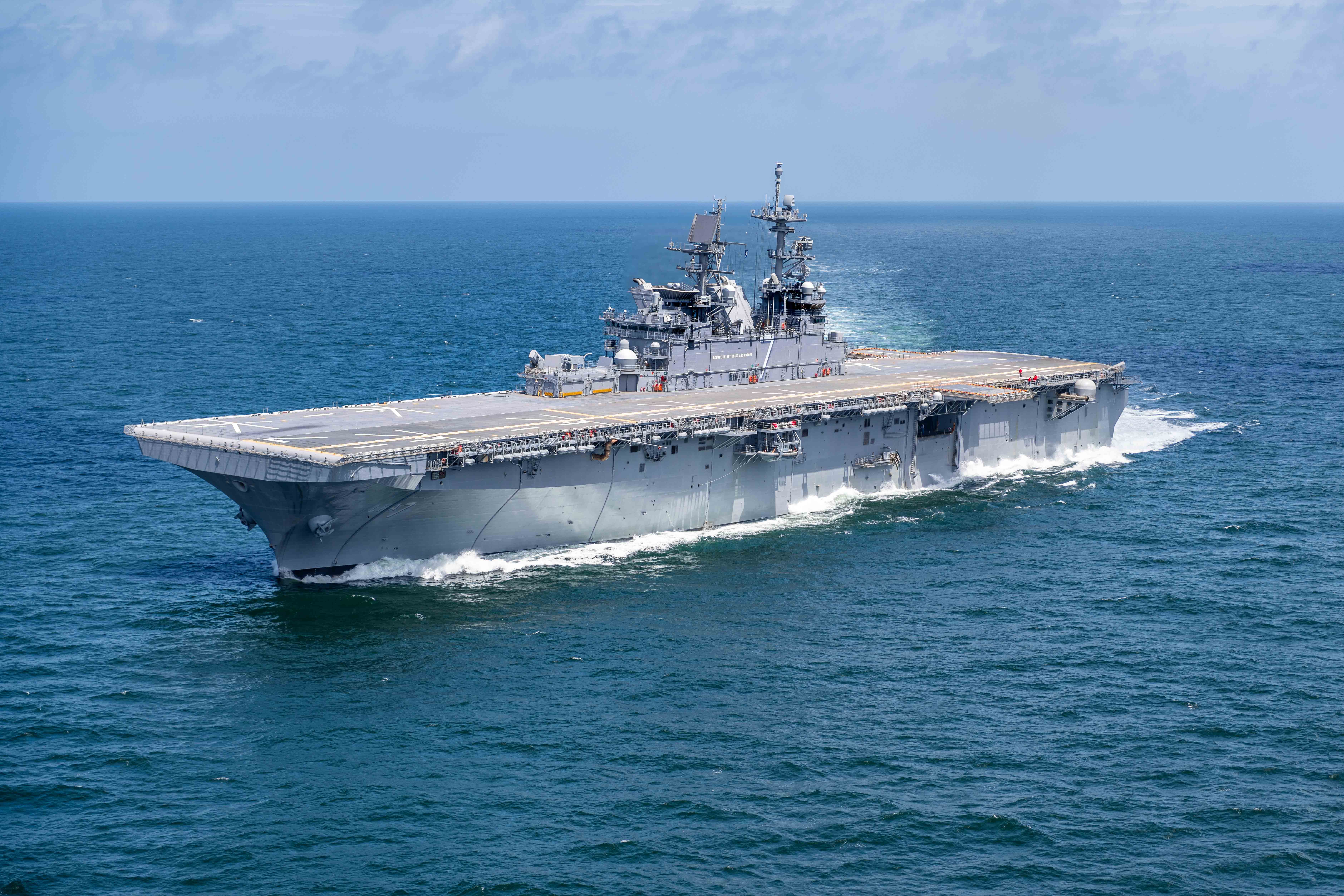
In a powerful display of American maritime reach, the Tripoli Expeditionary Strike Group has surged into the heart of the Indo-Pacific, marking a high-stakes milestone for the Navy’s newest powerhouse. For the first time, the America-class amphibious assault ship USS Tripoli is spearheading its own strike group as its flagship, leading a formidable armada of steel and fire through the strategic waters of the U.S. 7th Fleet. The fleet, pulsing with activity this December 11, serves as a steel-clad reminder of the United States’ commitment to a free and open corridor for global trade.
Cutting through the Pacific swells, the Tripoli is flanked by the sheer firepower of the Ticonderoga-class guided-missile cruiser USS Robert Smalls and the Arleigh Burke-class destroyer USS Rafael Peralta. This “triad of deterrence” isn’t just cruising; they are conducting a complex symphony of multi-domain operations. From the depths where submarines lurk to the heights where the horizon meets the stars, the strike group is locked, loaded, and ready to meet any challenge that arises in this vital theater of operations.
“Our Navy and Marine Corps team is maintaining peace and security while assuring access to the seas for all nations,” declared Rear Adm. Tom Shultz, commander of the strike group. He emphasized that as the world’s only permanently forward-deployed expeditionary force, the group’s versatility is unmatched. With a lethal combination of anti-air, anti-submarine, and anti-surface warfare capabilities, the admiral made it clear: the United States is prepared for any contingency, anywhere, at any time.
The “muscle” on the ground—and the air—comes from the 31st Marine Expeditionary Unit (MEU). This elite force is permanently positioned to strike with surgical precision or respond to humanitarian crises with equal speed. On the deck of the Tripoli, the roar of the F-35B Lightning II aircraft from Marine Fighter Attack Squadron 242 serves as a constant pulse of power. These fifth-generation stealth fighters give the strike group a technological edge that leaves adversaries in the shadows, providing flexibility and lethality that no other aircraft on the planet can match.
Col. Chris Niedziocha, commanding officer of the 31st MEU, underscored the “fight tonight” mentality that permeates the fleet. He noted that the unit’s deep-seated relationships with allies like the Japan Ground Self-Defense Force and Special Operations Command Pacific create a seamless web of security. In a region where the geopolitical temperature is always simmering, the Tripoli Expeditionary Strike Group stands as a chilling deterrent and a steady hand, ensuring that the waves of the Indo-Pacific remain open to all who sail them peacefully.
Feature image: USS Tripoli (LHA-7) – United States Navy