By Chicago Times Magazine –
March 15, 2024
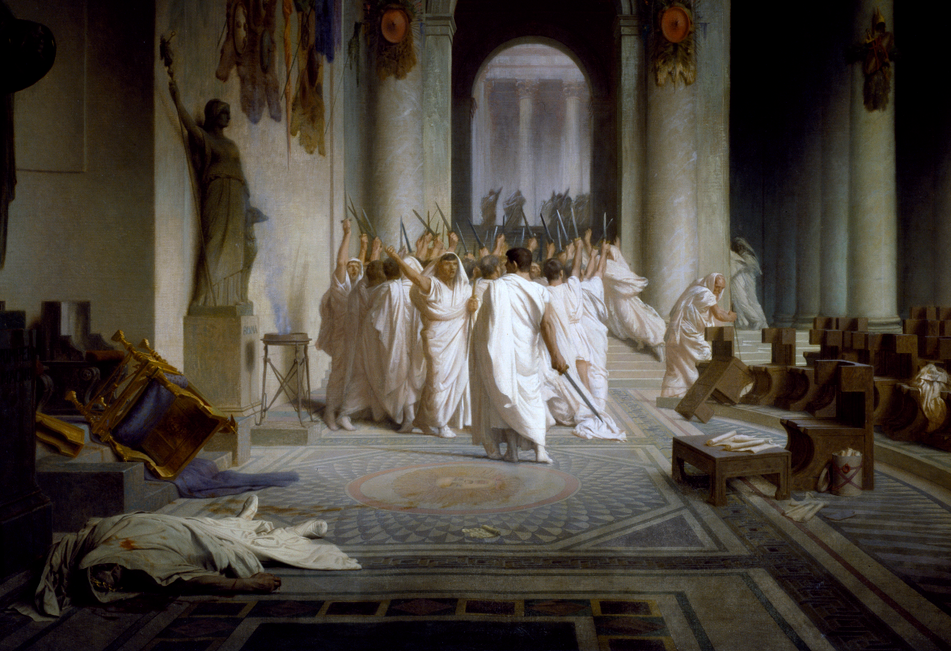
On March 15, 44 BC, a date forever etched in history as the Ides of March, the Roman Republic was shaken to its core with the assassination of Julius Caesar. Caesar, a brilliant general and charismatic leader, had risen to immense power, but his ambition and growing authoritarianism made him a target for a group of disgruntled senators who saw him as a threat to the Republic.
Caesar’s path to power was extraordinary. He rose through the ranks of the Roman military, conquering vast swathes of Gaul and expanding the Republic’s borders. His victories made him a hero to the Roman people, who adored his military prowess and patronage. However, his political maneuvers were more controversial. Caesar defied the Senate, the traditional seat of power, by crossing the Rubicon River in 49 BC, an act that ignited a civil war. Despite facing opposition from Pompey the Great, another powerful Roman general, Caesar emerged victorious, solidifying his control over the Rome Republic.
Caesar’s dominance bred fear and resentment among some senators. They believed their power was crumbling under his one-man rule. His appointment as dictator perpetuus further solidified their anxieties. Many senators, including Marcus Junius Brutus, a man considered a close friend of Caesar, felt the Republic was on the verge of becoming a totalitarian state, with Caesar as its absolute ruler.
Whispers of dissent turned into a full-fledged conspiracy. A group of over 60 senators, led by Brutus and Gaius Cassius Longinus, plotted Caesar’s demise. They believed his removal was necessary to preserve the Republic, even if it meant resorting to assassination.

The senators chose to strike on the Ides of March, a day typically landing on March 15th marking a full moon and a time to honor Jupiter, the king of gods. However, this time they would lure Caesar to a Senate meeting at the Theatre of Pompey, in which they would surround him and stab him twenty-three times until his lifeless body laid on the cold Senate floor.