By Chicago Times Magazine –
January 31, 2026
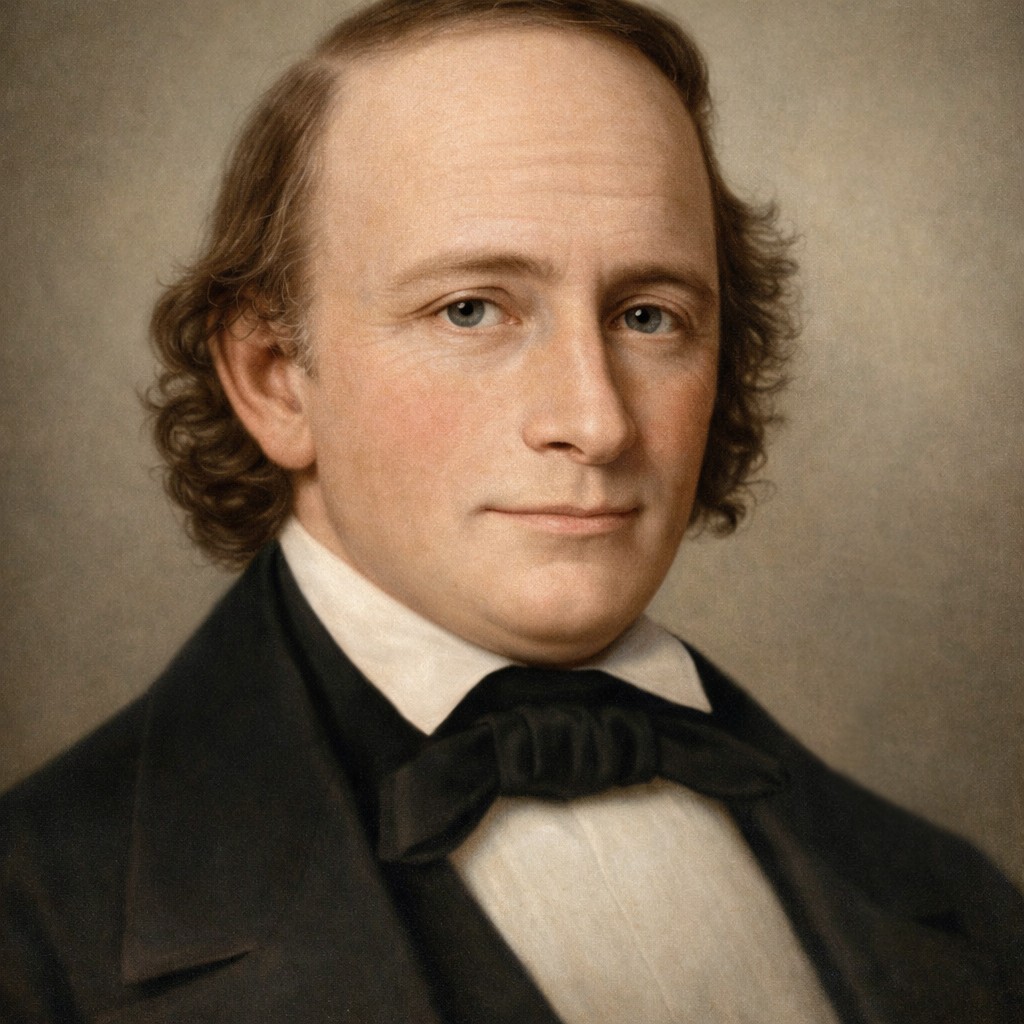
Buckner Stith Morris holds a singular and somewhat tragic position in the early history of Chicago, serving as the city’s second mayor and eventually becoming a central figure in one of the most controversial legal dramas of the American Civil War. Born on August 19, 1800, in Augusta, Kentucky, Morris was a product of the Southern gentry, a background that heavily influenced his legal career, his political trajectory, and his eventual downfall. His journey from a frontier lawyer to a civic leader and, finally, a suspected conspirator against the Union provides a window into the turbulent development of Chicago during the 19th century.
Morris began his professional life in Kentucky, where he was admitted to the bar in 1827 and briefly served in the Kentucky General Assembly. Seeking greater opportunities on the American frontier, he moved to Chicago in 1834, just one year after the town was incorporated. The Chicago he entered was little more than a muddy settlement of a few hundred people, yet it was already vibrating with the commercial energy that would define its future. Morris quickly established himself as a prominent legal mind, forming a partnership with J. Young Scammon, another foundational figure in the city’s history. Together, they navigated the complex land claims and commercial disputes of a burgeoning trade hub. Beyond the courtroom, Morris was deeply invested in the intellectual life of the infant city, helping to establish the Chicago Lyceum, the city’s first literary and debating society.
In 1838, Morris ran for mayor as a member of the Whig Party, challenging the Democratic dominance that had seen William B. Ogden become the city’s first executive. The election was a close-run affair, but Morris emerged victorious, capturing the mayoralty with a platform focused on stabilizing the city’s precarious finances following the Panic of 1837. His one-year term was characterized by the arduous task of managing a city that was physically expanding faster than its infrastructure could support. He oversaw early efforts to improve drainage and street grading, essential for a city built on a marsh, and worked to maintain order during a period of intense economic anxiety. While his tenure was relatively brief, it solidified his reputation as a capable administrator and a leading citizen.
Following his mayoralty, Morris continued to serve the public in various capacities, including terms as an alderman and as a judge for the Seventh Illinois Circuit Court. His legal acumen was highly regarded, and for a time, he moved in the same circles as other rising Illinois politicians, including Abraham Lincoln. Morris even served as a Whig elector alongside Lincoln during the 1840 presidential campaign. However, as the 1850s progressed and the national debate over slavery intensified, the political ground shifted beneath him. Morris found himself increasingly alienated from the rising Republican Party and its abolitionist wing. He aligned briefly with the Know-Nothing movement, running unsuccessfully for governor in 1856, and later identified as a “Peace Democrat” or Copperhead as the Civil War broke out.
The defining crisis of Morris’s life occurred in 1864, during the height of the Civil War. Chicago was home to Camp Douglas, a massive Union prisoner-of-war camp that held thousands of Confederate soldiers. As the war dragged on, a group of Southern sympathizers and members of the “Sons of Liberty”—a secret society opposed to the war—allegedly hatched a plan known as the Northwest Conspiracy. The goal was to stage an armed uprising, liberate the prisoners at Camp Douglas, and use them to overthrow the pro-Union governments of the Midwestern states. Because of his vocal opposition to the war and his known Southern sympathies, Morris was arrested by military authorities and charged with conspiracy.
The trial was a sensation, reflecting the intense paranoia and division within Chicago at the time. Morris was accused of using his home and his resources to aid Confederate agents and facilitate the planned insurrection. During the proceedings, it was alleged that Morris had expressed a desire to see the prisoners freed so they could “send abolitionists to hell in a handbasket”—a phrase often attributed to him that has since entered the common lexicon. He was held in military custody for nine months, a period of incarceration that proved ruinous. While he was eventually acquitted by a military commission for lack of direct evidence, the damage to his reputation and his finances was irreversible. His properties were foreclosed upon while he was in prison, and his standing in Chicago society was shattered.
Morris spent his final years in relative obscurity, a ghost of the city’s founding era. He remained bitter about his treatment by the government, and his family famously refused to donate his personal papers to the Chicago Historical Society, citing the city’s betrayal of his legacy. He died on December 16, 1879, at the age of 79. Today, Buckner Stith Morris is remembered less for his contributions as the city’s second mayor and more as a symbol of the deep, often violent internal conflicts that gripped the North during the Civil War. His life serves as a reminder that the history of Chicago was shaped not just by its builders and boosters, but also by those who found themselves on the losing side of the nation’s greatest ideological struggle.