By Chicago Times Magazine –
January 01, 2025
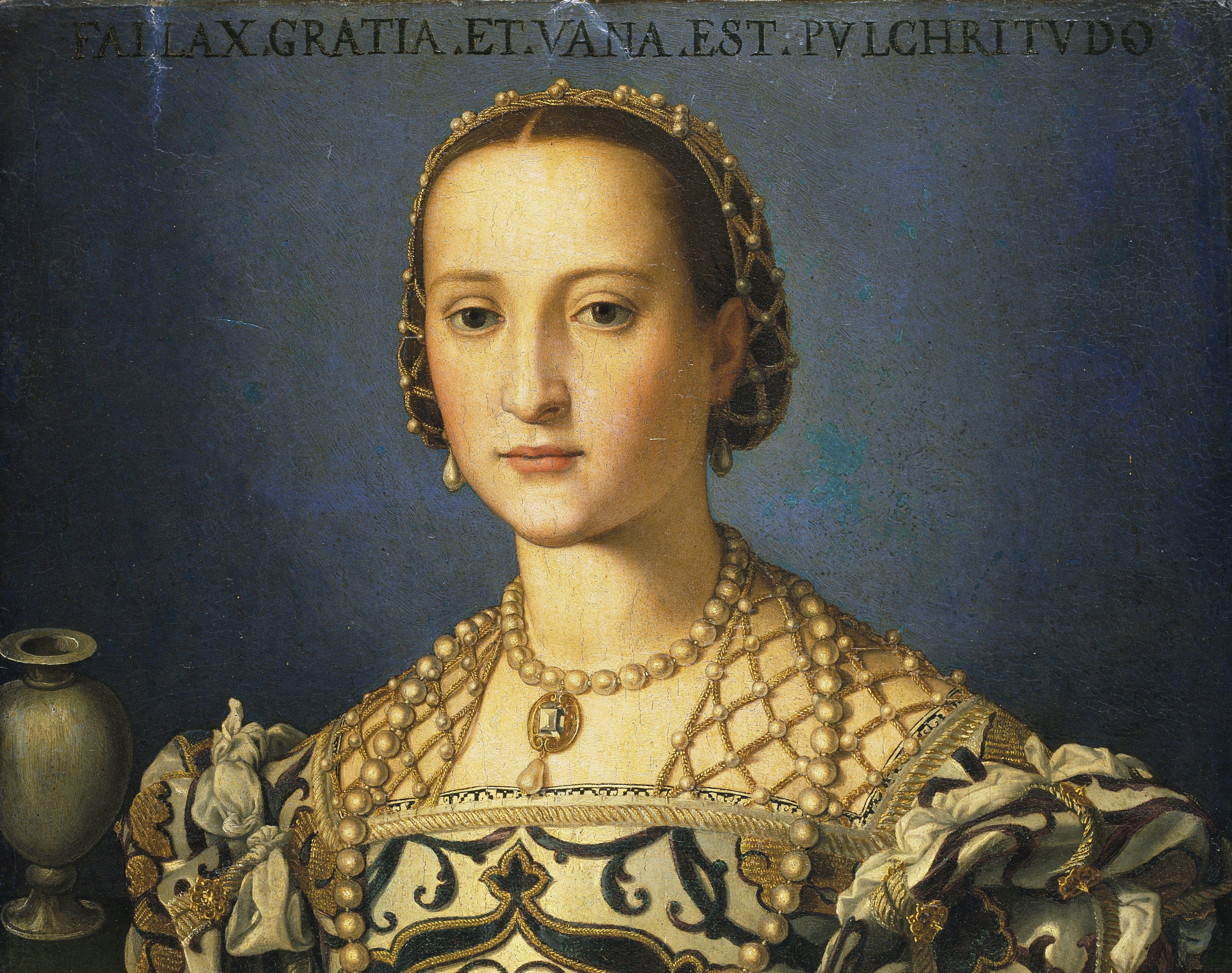
Bronzino’s 1550 portrait of Eleanora of Toledo, the Duchess of Florence, is not merely a likeness; it’s a meticulously crafted jewel, a testament to the Florentine Renaissance’s obsession with artifice and the projection of Medici power. The Duchess, resplendent in a gown of shimmering gold brocade, sits regally upon a throne-like chair, her gaze directed towards the viewer with an unsettling blend of beauty and vulnerability.
The first impression is one of overwhelming opulence. Eleanora is adorned with jewels, her fingers laden with rings, and a magnificent pearl necklace adorns her neck. This lavish display of wealth serves a dual purpose: it underscores the Medici family’s power and wealth, while simultaneously hinting at the ephemeral nature of earthly possessions. The gold of her gown, though dazzling, also carries a somber undertone, a reminder of the fleeting nature of human life.
Bronzino, a master of Manierismo, employs a cool, almost clinical precision in his technique. The Duchess’s features are rendered with an almost unsettling sharpness, each detail meticulously observed and faithfully reproduced. Her skin, though pale, appears almost translucent, while her eyes, though seemingly alive, hold a chilling stillness. This detached, almost mechanical approach to portraiture reflects the intellectual climate of the Florentine Renaissance, where reason and scientific inquiry were highly valued.
However, beneath the surface of this carefully constructed facade lies a subtle undercurrent of unease. Eleanora’s posture, though regal, is somewhat stiff and unnatural. Her gaze, though direct, lacks warmth and seems to hold a hint of melancholy. This sense of unease is further amplified by the cool, almost metallic sheen of her attire and the stark, almost theatrical backdrop against which she is portrayed.
In conclusion, Bronzino’s portrait of Eleanora of Toledo is a masterpiece of Renaissance art, a captivating blend of beauty, artifice, and underlying melancholy. It serves as a powerful reminder of the complexities of human existence, the fleeting nature of earthly power, and the enduring power of art to capture the essence of a bygone era.