By Chicago Times Magazine –
June 25, 2024
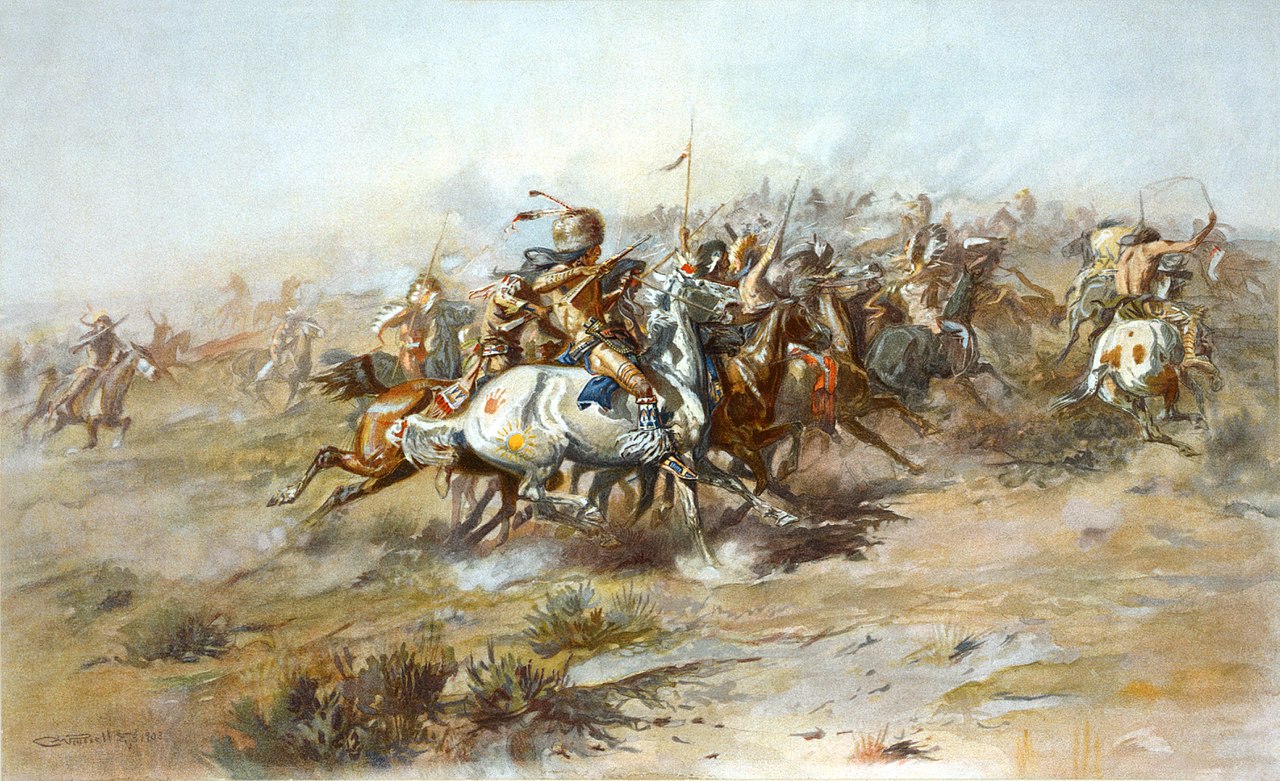
On June 25th, 1876, on the banks of the Little Bighorn River in the once expansive Montana Territory, a bloody battle occurred between the United States Army’s 7th Cavalry Regiment, led by Lieutenant Colonel George Armstrong Custer, and a combined force of Lakota Sioux, Northern Cheyenne, and Arapaho warriors. This encounter, forever burned into American memory as “Custer’s Last Stand,” was a decisive defeat for the US Army and a significant victory for the Lakota and their allies.
The battle unfolded within the context of the Great Sioux War of 1876. Tensions had been simmering for years due to the discovery of gold in the Black Hills, a region sacred to the Lakota. The US government, disregarding treaties guaranteeing Lakota land rights, demanded the tribes relocate to reservations. When negotiations failed, military action was deemed necessary.
General Alfred Terry, commander of the Department of Dakota, devised a three-pronged attack to force the Lakota onto reservations. Custer’s 7th Cavalry, roughly 650 strong, was tasked with locating and engaging the Lakota.
Custer, a controversial figure known for his Civil War exploits and aggressive tactics, disregarded some of Terry’s orders. Custer made the mistake of splitting his force, sending Major Marcus Reno and Captain Frederick Benteen on separate paths. On June 25th, encountering a much larger Lakota and Cheyenne encampment than anticipated, Custer led around 208 men in a forlorn hope assault.
The ensuing battle remains a subject of debate. Historical accounts suggest Custer underestimated his foes’ numbers and fighting spirit. The Lakota and Cheyenne, led by figures like Sitting Bull and Crazy Horse, effectively countered Custer’s attack. Separated from Reno and Benteen, Custer’s force was surrounded and overwhelmed. Custer and those under his immediate command were cut down and mutilated. Meanwhile, Reno and Benteen, after a separate engagement, managed to fortify a defensive position and hold off Lakota attacks until relieved by other US forces.
The Battle of the Little Bighorn, aka the Battle of the Greasy Grass, was a devastating loss for the US Army. Public outrage spurred further military campaigns, ultimately forcing the Lakota and their allies onto reservations. The battle also solidified Custer’s place in American lore, though his legacy today has been tarnished.
The Little Bighorn Battlefield National Monument today serves as a somber reminder of this pivotal conflict. Studying the battle compels us to consider the perspectives of all those involved, offering a deeper understanding of this tumultuous period in American history.