By: Curtis Hunsecker, Chicago Times Magazine –
April 18, 2026
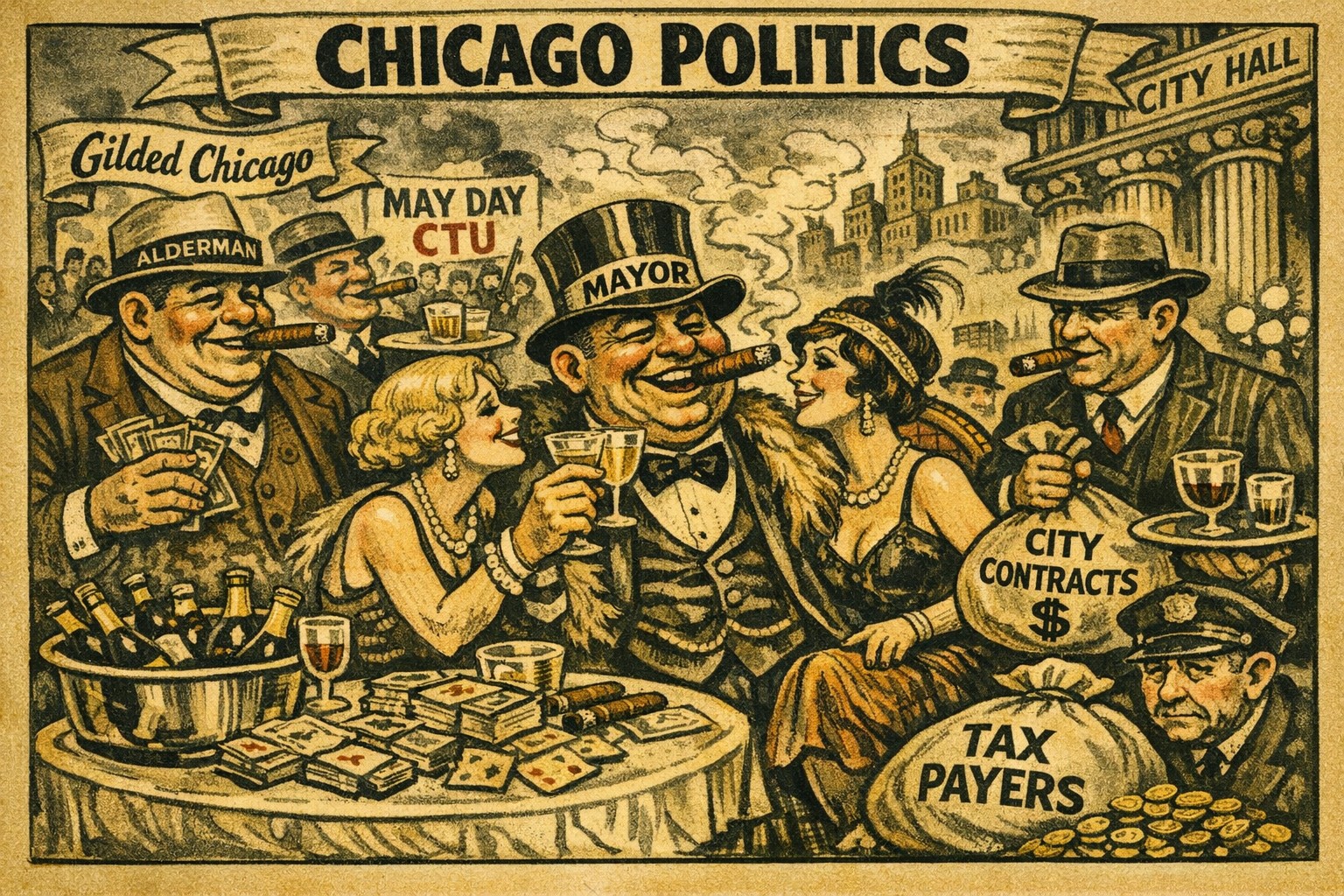
Mayor Brandon Johnson’s recent declaration of May 1st as a day of “civic action”—a joint venture between Chicago Public Schools (CPS) and the Chicago Teachers Union (CTU)—is more than just a historical nod to the Haymarket Strike. It is a masterclass in irony. While Johnson evokes the “consciousness of a gilded nation” to frame his administration’s radicalism as a grassroots struggle, the reality is far more cynical. Today, the “gilded” class isn’t the industrialist of the 1880s; it is the political elite in City Hall and the union leadership living comfortably off the dwindling coffers of the Chicago taxpayer.
In his statement, Johnson speaks of “meaningful solidarity” and “community resistance.” However, one must ask: resistance against whom? The Mayor, a former CTU “organizer” himself, is now the ultimate insider. By effectively sanctioning a political demonstration under the guise of “civic action,” Johnson is blurring the line between public service and partisan activism.
While the Mayor and his “cronies”—a tight-knit circle of former union activists and high-salaried bureaucrats—congratulate themselves on their progressivism, the people footing the bill are left holding the bag. It is a gilded life indeed when you can dictate the terms of your own employment, declare holidays for your political base, and use the machinery of the public school system as a recruitment tool for “meaningful solidarity,” all while the city’s financial health continues to crater.
The statement promises that schools will “remain open for instruction,” but immediately hedges by offering “multiple opportunities” to participate in action “both inside and outside of the classroom.” This is a wink and a nod to a system that has increasingly prioritized social engineering over foundational literacy and mathematics.
For the average Chicago family, school is meant to be a place of learning, safety, and stability. By transforming a school day into a day of “resistance,” the Johnson administration is signaling that the classroom is merely another theater for the CTU’s political ambitions. The “forces trying to tear us apart” that Johnson mentions are, ironically, often the very policies his administration champions—policies that prioritize union demands over the educational outcomes of Chicago’s youth.
Mayor Johnson’s invocation of the “simple demand of an eight‑hour workday” may sound like a tribute to Chicago’s labor history, but in today’s context it functions as a convenient distraction. The struggles of 1886 were indeed simple; the demands of 2025 are anything but.
The CTU recently approved $1.5 billion contract — a staggering figure by any measure — arrives at a moment when CPS is not growing but shrinking. CPS enrollment has been declining for years, with tens of thousands fewer students than a decade ago and projections that the downward trend will continue. Yet the district is simultaneously absorbing one of the most expensive labor agreements in its history, all while wrestling with deep structural deficits.
Against that backdrop, the Mayor’s “impactful May Day” begins to look less like a solemn nod to history and more like a carefully staged rally designed to energize a political base ahead of the next round of revenue debates. Chicagoans have seen this choreography before: celebrate labor, invoke legacy, and then soak the tax payers.
While the Mayor resides in the safety of his protected political bubble, the “gilded” life he leads is funded by property owners and small businesses who are seeing their costs skyrocket. The “solidarity” Johnson seeks is a one-way street: the taxpayers provide the resources, and the administration provides the rhetoric.Mayor Johnson’s May Day statement is a testament to the disconnect between the ruling class in Chicago and the citizens they serve. To invoke the struggle against a “gilded nation” while presiding over a regime of high-tax, high-spend patronage is an insult to the history of Chicago’s working class. The real “community resistance” will eventually come not from the halls of the CTU, but from the taxpayers tired of financing the gilded lifestyles of those who treat the city’s treasury as their personal political war chest.