By Chicago Times Magazine
February 14, 2026
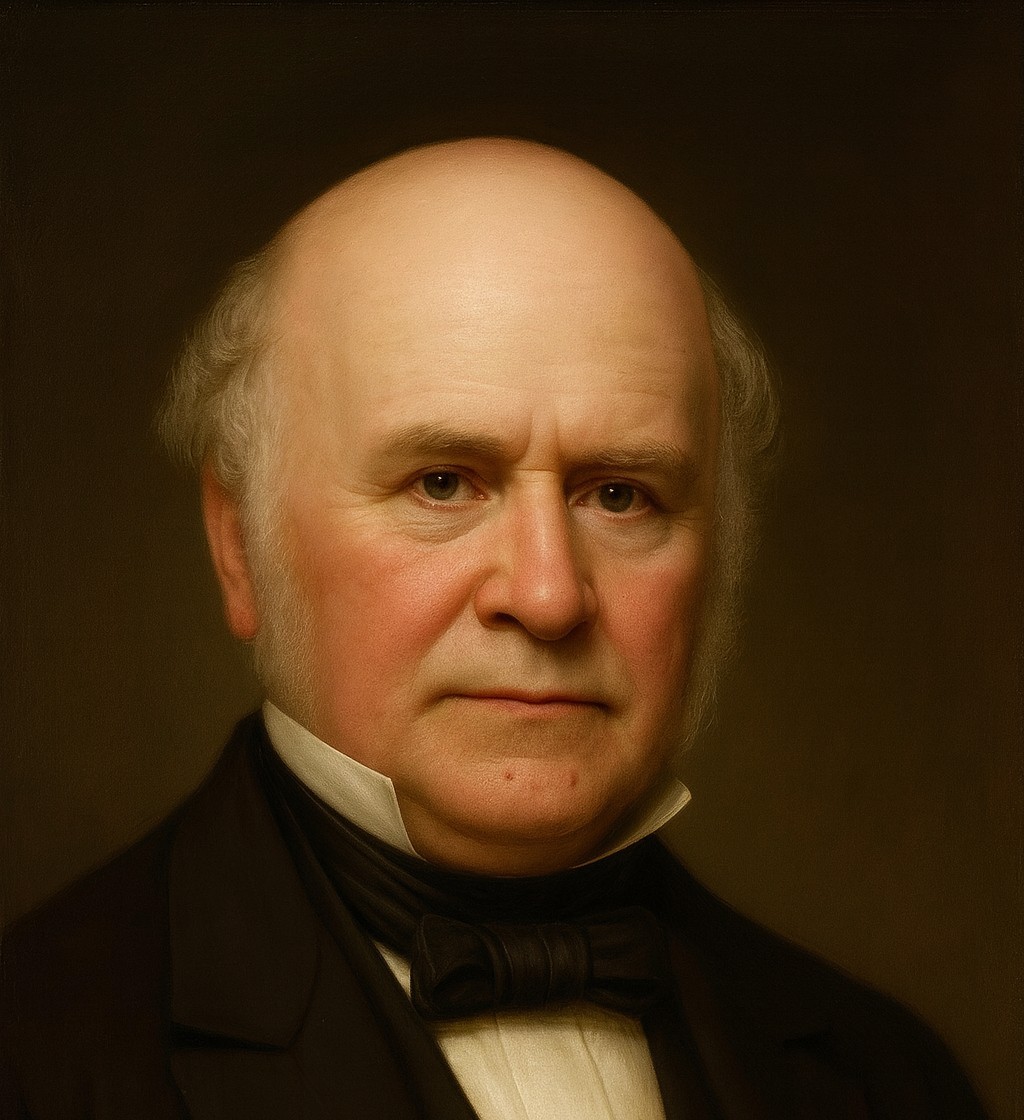
The history of Chicago is often told through the lens of its titanic figures—the Daleys, the Burnhams, and the Pullmans—men who shaped a skyline of steel and glass. Yet, long before the city was a global capital of industry, it was a muddy, chaotic frontier settlement struggling to define itself against the vastness of the Illinois prairie. In the year 1840, when the population hovered just above four thousand souls, the young city looked to a master builder to guide its shaky foundations. That man was Alexander Lloyd, a contractor and carpenter whose life mirrored the very development of the city he would eventually lead as its fourth mayor. To understand Lloyd is to understand the raw, ambitious DNA of early Chicago, a place where the line between a private citizen and a public servant was as thin as the timber walls of the cottages he built.
Born in Orange County, New York, on August 19, 1805, Lloyd was part of a generational tide of New Englanders and New Yorkers who looked westward for opportunity. He arrived in the swampy outpost of Chicago in 1833, a pivotal year that saw the village officially incorporated as a town. At that time, Chicago was little more than a collection of shacks and log cabins clustered around the forks of the river, with Fort Dearborn still standing as a sentinel of a vanishing frontier. Lloyd did not arrive with the inherited wealth of the Eastern elite; instead, he brought the practical skills of a builder. He opened a shop and quickly established himself as a man who could literalize the city’s growth. Within four years, he was recognized as one of the principal contractors and builders in the region, a man whose hands helped raise the structures that transformed a trading post into a bustling commercial hub.
Lloyd’s ascent in the private sector was inextricably linked to his commitment to the city’s rudimentary infrastructure. In a town built almost entirely of wood and perched on a marsh, the threat of fire was the primary existential dread of every citizen. Lloyd understood this more than most. He joined the volunteer fire department, an organization that was as much a fraternal order and political stepping stone as it was a public safety necessity. By 1838, his leadership and technical expertise led to his appointment as Chief Engineer of the Chicago Fire Department. It was a role that required both physical bravery and organizational acumen, as he had to coordinate a ragtag group of volunteers with limited equipment against the ever-present threat of a conflagration. This tenure as Chief Engineer solidified his reputation as a man of action, a “protector” of the city’s physical assets, and a leader who could command the respect of the working class and the merchant elite alike.
The political landscape of 1840 was a tumultuous reflection of national anxieties. The Panic of 1837 had left the American economy in a shambles, and Chicago was not immune to the resulting depression. The city’s third mayor, Benjamin Wright Raymond, was a Whig who favored more conservative fiscal policies. Lloyd, a staunch Democrat, represented a different vision. The election of 1840 was a hard-fought contest between the Whigs and the Democrats, mirroring the “Log Cabin and Hard Cider” campaign of William Henry Harrison on the national stage. In Chicago, however, the issues were local and visceral: the completion of the Illinois and Michigan Canal, the stabilization of the city’s credit, and the basic maintenance of a city that seemed to be sinking into its own mud. Lloyd emerged victorious, defeating the incumbent Raymond by a significant margin, and was sworn in as mayor on March 9, 1840.
Lloyd’s mayoralty was characterized by a pragmatic focus on the essential functions of a city in crisis. He inherited a treasury that was virtually empty and a populace that was increasingly frustrated by the lack of progress on public works. In his inaugural address, he spoke with the directness of a builder rather than the flourish of a career politician. He recognized that for Chicago to survive its infancy, it needed more than just grand plans; it needed a stable educational system and a reliable way to manage its growing pains. It was under Lloyd’s watch that the Chicago public school system began to take a more formalized shape. Though the city was cash-poor, Lloyd was a vocal advocate for the “common school,” believing that a literate and educated citizenry was the only way to ensure the long-term viability of the Democratic experiment on the frontier.
One of the most pressing challenges during his one-year term was the management of the city’s physical environment. Chicago’s geography was famously difficult—a low-lying plain that turned into an impassable mire during the spring thaws. Lloyd used his background as a contractor to oversee the first meaningful attempts at grading the streets and improving drainage, though the ultimate solution of raising the city’s level remained decades away. He also had to navigate the delicate politics of the Illinois and Michigan Canal. The project was the city’s greatest hope for economic salvation, but the state’s financial collapse had halted work. Lloyd used his office to lobby for continued investment, understanding that Chicago’s destiny as a gateway between the Great Lakes and the Mississippi River depended entirely on that man-made artery.
Beyond the nuts and bolts of infrastructure, Lloyd’s term was a reflection of the evolving social fabric of the city. The 1840 census, conducted during his time in office, recorded a population of 4,470 people. It was a diverse and often fractious group—immigrants from Ireland and Germany, ambitious merchants from the East, and laborers who had come to dig the canal. Lloyd’s Democratic party was the home for many of these newer arrivals, and his administration helped to integrate these groups into the civic life of the city. He presided over a Common Council that was often divided by ward-level interests, yet he managed to maintain a level of decorum and progress that kept the city from fracturing under the weight of the economic depression.
As was common in the early days of Chicago, Lloyd served only a single one-year term as mayor, stepping down in March 1841 to be succeeded by fellow Democrat Francis Cornwall Sherman. His departure from the mayor’s office did not, however, mark the end of his service. He returned to his private business interests, which had expanded to include a lumberyard and a grocery store, but he remained a fixture in the city’s burgeoning civic institutions. In 1842, he served as a trustee for the city’s schools, continuing his advocacy for public education. Later, in 1850, he returned to the Common Council as an alderman for the Second Ward, stepping in to fill a vacancy. This willingness to serve in “lesser” roles after holding the highest office in the city speaks to a sense of civic duty that was characteristic of Chicago’s founding generation.
Lloyd’s later years saw him witness the very explosion of growth he had helped prepare for. He saw the arrival of the first railroads, the completion of the canal, and the transformation of Lake Street into a premier commercial thoroughfare. He remained a man of the people, known for his work ethic and his straightforward manner. When he passed away on May 7, 1872, at the age of sixty-six, the city he left behind was unrecognizable from the mud-caked village he had entered in 1833. He died of “rheumatism of the heart,” a diagnosis of the time that suggested a life of physical toll and perhaps the stress of building a metropolis from the ground up. He was laid to rest in Rosehill Cemetery, joining many of his contemporaries who had shared in the audacity of the Chicago project.
The legacy of Alexander Lloyd is not found in a single iconic monument or a grand boulevard that bears his name. Instead, it is found in the very bedrock of Chicago’s governance and its commitment to the essential services of a modern city. He was a “foundational” mayor in every sense of the word. He understood that a city is not just a collection of buildings, but a social contract that requires maintenance, education, and protection. At a time when Chicago could have easily withered away like so many other frontier boomtowns, Lloyd provided the steady hand of a master builder. He ensured that the foundations were deep enough to support the weight of the future, even if he couldn’t have imagined just how high the city would eventually climb.
In the grand narrative of American history, men like Lloyd are often overshadowed by the “Great Men” of the Civil War or the Gilded Age. Yet, there is something profoundly democratic and quintessentially American about his story. He was the tradesman who became a chief, the builder who became a mayor, and the citizen who never felt himself too important to serve on a school board or a city council ward. Alexander Lloyd represented the transition of Chicago from an outpost to a city, providing the civic craftsmanship required to turn a marshy riverbank into a place of permanence. He remains a testament to the idea that the most important work of building a city often happens in the mud, in the schoolrooms, and in the quiet, steady management of the everyday.