By Chicago Times Magazine
February 21, 2026
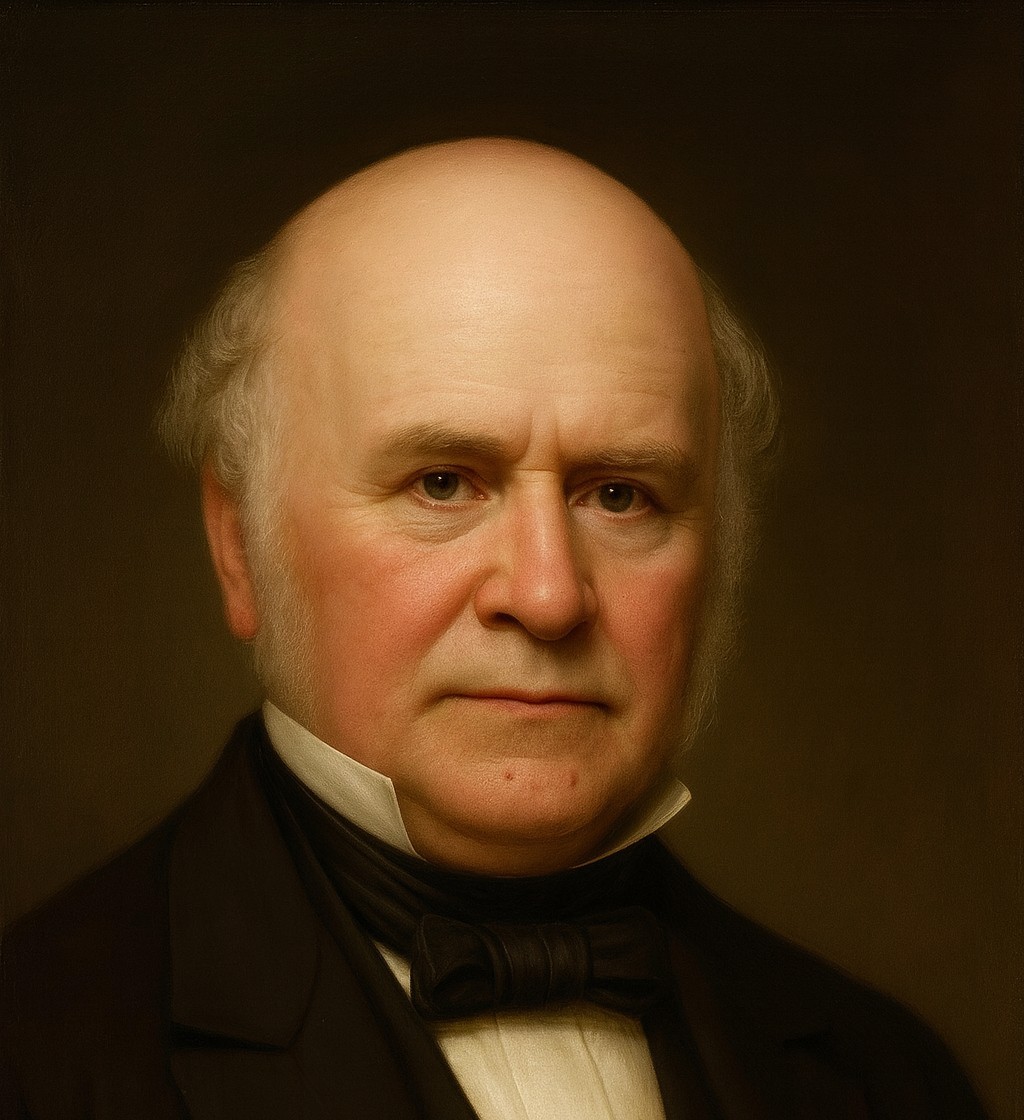
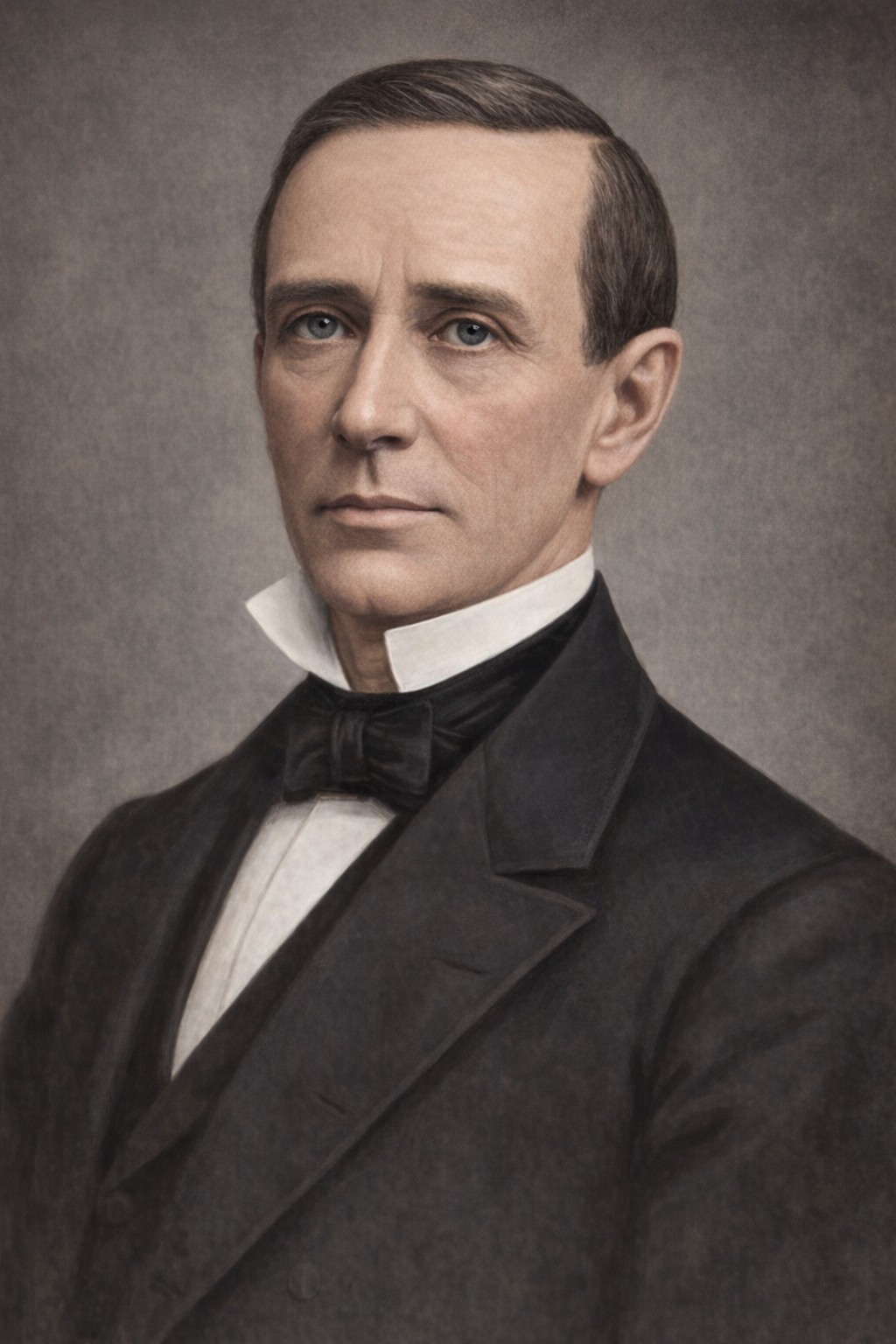
Chicago has never lacked for big personalities, but few early leaders embodied the city’s restless, improvisational spirit quite like Francis Cornwall Sherman. Long before he became a three‑term mayor, Sherman was a builder, a brickmaker, a hotelier, and a civic problem‑solver whose fingerprints can still be traced across the city’s early landscape. His life reads like a frontier epic: a young man from Connecticut who arrived in a muddy settlement on the edge of Lake Michigan and helped transform it into a rising metropolis.
Born on September 18, 1805, in Newtown, Connecticut, Sherman grew up far from the booming, brawling energy that would define his adopted home. Yet when he stepped off a schooner in Chicago in April 1834, he found a place perfectly suited to his temperament—raw, ambitious, and hungry for people willing to build something from nothing. Sherman wasted no time. Within months he had constructed a modest frame house on Randolph Street, a boarding establishment that doubled as a foothold in a city still more prairie than pavement.
Chicago in the 1830s was a place where one person could wear a dozen hats, and Sherman wore them all. He built houses, ran a boarding operation, and—most importantly—turned to brickmaking. Using clay dug from the land near Adams and Market Streets, he established kilns that supplied the material for some of the city’s earliest substantial buildings. His bricks helped raise Archibald Clybourne’s mansion, one of the most prominent homes in early Chicago, and for more than fourteen years Sherman’s kilns fired the literal building blocks of a growing city. In a town where fire was a constant threat and wooden structures vanished overnight, brick was a promise of permanence. Sherman became one of the men who could deliver it.
But Sherman was never content with a single enterprise. In 1837, he opened the City Hotel at Randolph and Clark Streets, a three‑story brick building that quickly became a hub of civic and commercial life. Chicagoans would later know it as the Sherman House, a name that became synonymous with hospitality, political gatherings, and urban sophistication. Sherman expanded the hotel repeatedly, and by 1860 he had replaced the original structure with a grand new edifice—182 by 161 feet, five stories tall, and widely regarded as one of the finest hotels in the country. It was a statement piece, a declaration that Chicago was no longer a frontier outpost but a city with ambition and polish.
Sherman’s rise in public life was just as steady. In 1835, barely a year after arriving, he was elected a village trustee. When Chicago incorporated as a city in 1837, he served on its first Board of Aldermen. He sat on the County Commissioners’ Court and the Board of Appraisers of the Canal Lands, positions that required both administrative skill and a keen understanding of the region’s development. Sherman was not a man who waited to be asked; he stepped into the work of building civic institutions with the same energy he brought to brickmaking and hotel construction.
His first term as mayor, from 1841 to 1842, came at a time when Chicago was still finding its footing. The city was young, its finances shaky, its infrastructure rudimentary. Sherman, a Democrat, approached the job with a practical sensibility shaped by years of hands‑on labor. He focused on stabilizing the city’s finances and improving administrative efficiency—unglamorous tasks, perhaps, but essential ones. Chicago was a place of big dreams, but it needed steady hands to keep it from collapsing under its own momentum.
Two decades later, Chicago called him back. Sherman returned to the mayor’s office in 1862, in the midst of the Civil War, and served until 1865. The city he governed this time was vastly different: a booming transportation hub, an industrial powerhouse, and a critical supplier of men and materiel to the Union war effort. Chicago’s population had exploded from a few thousand to more than 100,000. The challenges were larger, the stakes higher, and the pressures immense. Yet Sherman’s leadership remained grounded in the same principles—practicality, stability, and a deep commitment to the city’s long‑term growth.
His second and third terms required balancing local needs with national demands. Chicago’s railroads were humming, its factories expanding, and its civic institutions straining under the weight of rapid growth. Sherman’s administration worked to maintain order, support wartime logistics, and keep the city’s infrastructure functioning despite shortages and disruptions. His experience as a builder proved invaluable; he understood that a city’s strength lay in its foundations, both literal and administrative.
Sherman’s personal life was woven into his public career. He married Electa Trowbridge of Danbury, Connecticut, before moving west, and together they raised seven children. Their son, Francis Trowbridge Sherman, became a brigadier general in the Union Army—a testament to the family’s deep engagement with the nation’s defining conflict. The Shermans were not merely residents of Chicago; they were part of its civic fabric.
Even after retiring from brickmaking in 1850, Sherman remained active in real estate and development. His investments helped shape the city’s urban landscape, and his business ventures provided opportunities for countless early Chicagoans. He was a man who believed in building—structures, institutions, and communities.
Sherman died on October 7, 1870, just one year before the Great Chicago Fire reshaped the city he had spent decades helping to construct. He was buried in Graceland Cemetery, the resting place of many of Chicago’s most influential figures. The Sherman House, rebuilt after the fire, continued to stand as a monument to his vision and ambition.
His legacy is not as widely celebrated today as that of some later mayors, but his impact is undeniable. Sherman bridged two eras: the rough‑and‑ready frontier town of the 1830s and the industrializing metropolis of the 1860s. He helped lay the foundations—political, architectural, and cultural—on which Chicago would build its future. He was a craftsman, a businessman, and a civic pioneer, a man whose life mirrored the city’s own evolution from muddy settlement to urban powerhouse.
To understand Sherman is to understand the spirit of early Chicago: resilient, ambitious, and endlessly willing to reinvent itself. His story reminds us that cities are built not only by grand visionaries but also by the steady, determined work of people who see possibility where others see only prairie. Sherman saw a city where others saw a swamp. And then he built it.