By Chicago Times Magazine –
August 19, 2024
Well before the construction of the United Center, Chicago’s sporting landscape underwent a significant transformation with the opening of Chicago Stadium in 1929. Built by business man Paddy Harmon, the arena quickly became a focal point for professional athletics and a cherished landmark in the city.
Initially designed for hockey, the Stadium became the permanent home of the Chicago Blackhawks, a young National Hockey League (NHL) team. The arena’s innovative design, featuring unobstructed views and a seating capacity of 18,000, fostered a passionate atmosphere. Dubbed the “Madhouse on Madison” due to its exceptional acoustics that amplified crowd noise, the stadium created an intimidating environment for opposing teams and a thrilling experience for Chicago fans.
The arrival of the Chicago Bulls in 1967 broadened the stadium’s appeal. Witnessing the rise of of his Highness Michael Jordan the Great and the team’s subsequent NBA championships [do we need to mention how many? That is for you Riley!] in the 1990s within the electric confines of the stadium became a golden memory for a generation of Chicagoans.
Beyond its role as a sporting venue, the Stadium served a vital role in the city’s cultural life. It hosted a diverse range of events, including national political conventions, boxing matches, concerts featuring legendary performers like Elvis Presley and Frank Sinatra, and even roller derby bouts. This adaptability cemented the stadium’s position as a central hub for entertainment and public gatherings.
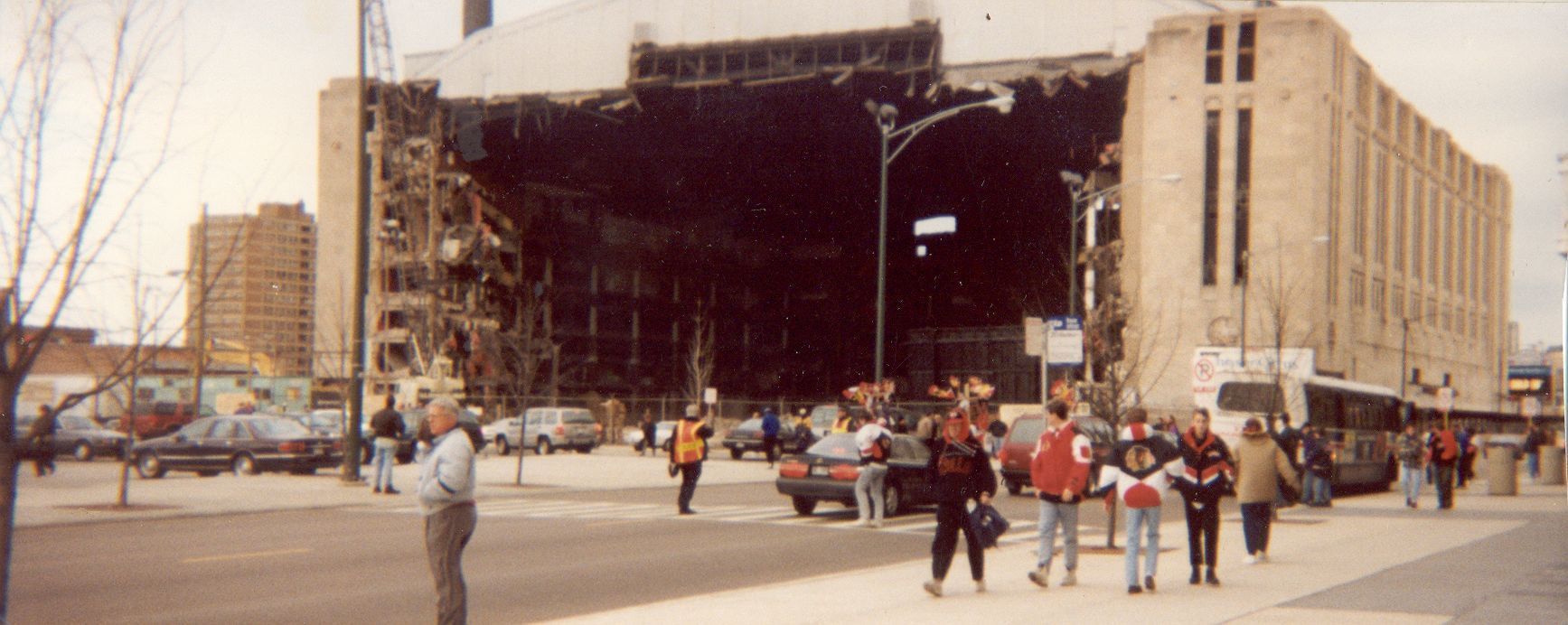
However, by the 1990s, the aging infrastructure necessitated a change. The stadium’s closure in 1994 marked the end of an era. While replaced by the modern United Center, the Stadium’s legacy remains deeply embedded in the city’s sporting history. The arena not only fostered a fervent passion for hockey and basketball but also served as a platform for cultural events that resonated with Chicagoans for decades.
Feature image: Chicago Stadium demolition, 1994 | Subwoofer via Wikipedia