By Chicago Times Magazine –
May 1, 2024
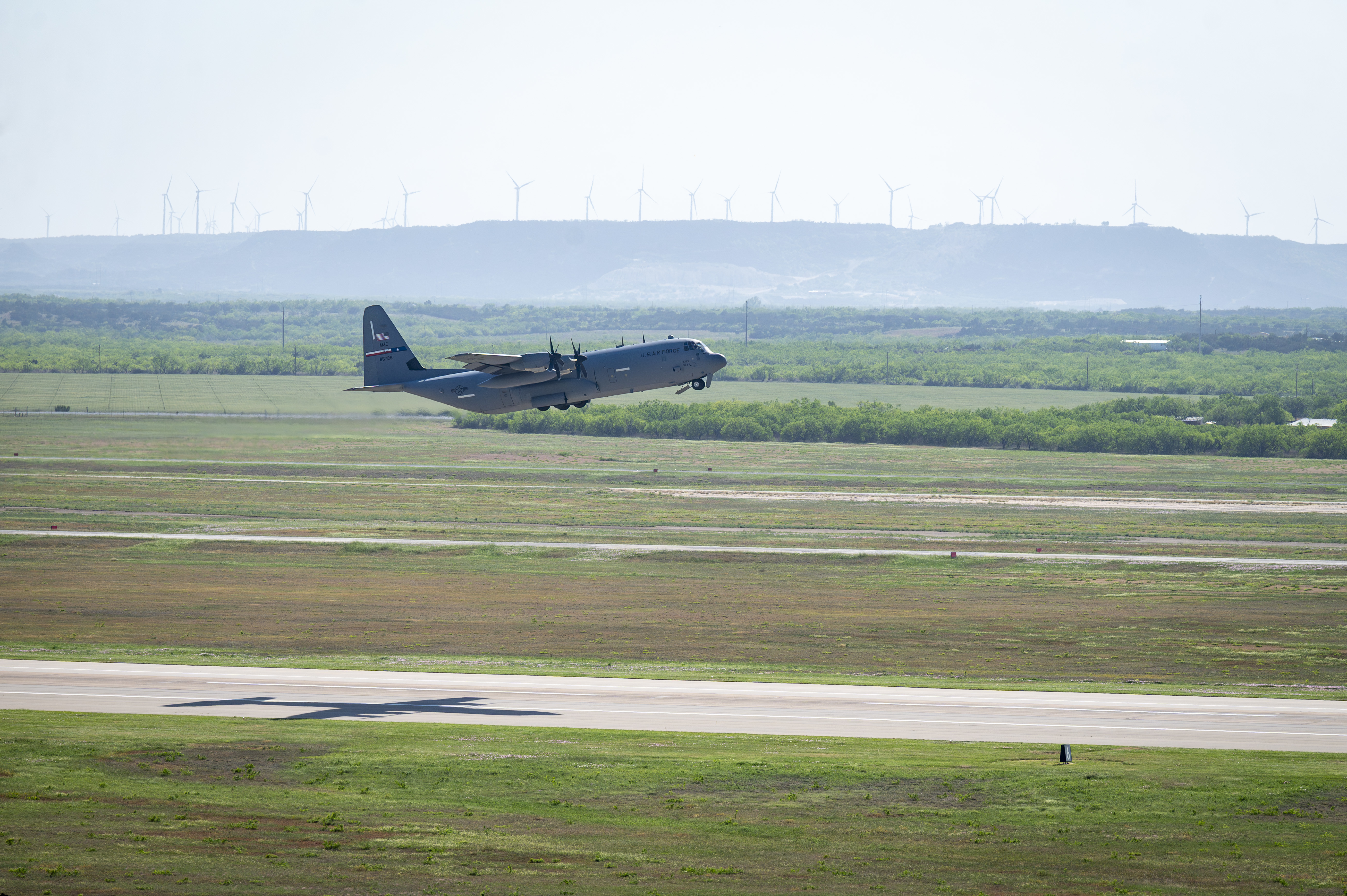
The skies over Guam witnessed a historic feat on April 20th, 2024, as the 317th Airlift Wing (AW) of the US Air Force (USAF) completed the first-ever C-130J Super Hercules Max Endurance Operation (MEO) using external fuel tanks. This achievement marks a significant milestone for Air Mobility Command (AMC), extending the operational reach of the workhorse C-130J.
The mission, dubbed “Hazard Leap,” saw a single C-130J, strapped with additional fuel tanks, embark on a remarkable 26-hour odyssey. This extended flight duration demonstrates the aircraft’s ability to stay airborne for far longer stretches without needing to land for refueling. This capability is a game-changer, allowing the 317th AW to deliver critical supplies and personnel to remote locations further and faster than ever before.
The external fuel tanks, which can hold an additional 17,000 pounds of fuel, translate to roughly four extra hours of flying time. This increased range translates to several key advantages. First, it minimizes ground time, ensuring critical resources reach their destinations quicker. Second, it offers greater flexibility for missions where refueling opportunities might be limited. Additionally, the C-130J can carry extra fuel to offload for joint forces operating in austere environments, extending their operational reach as well.
The successful completion of Hazard Leap is the culmination of efforts that began in May 2023. The 317th AW became the first C-130J unit within AMC to experiment with external fuel tanks, paving the way for this historic operation. This achievement underscores the USAF’s commitment to continuously modernize its airlift capabilities to meet the ever-evolving demands of global operations.
The C-130 Hercules, a ubiquitous symbol of military airlift, boasts a rich history of continuous development. However, the C-130J Super Hercules stands out as a transformative variant, marking a significant leap forward in capabilities and ushering in a new era of air mobility dominance.
The impetus for the C-130J emerged in the late 1980s as the C-130H entered service. Recognizing the potential for further advancement, Lockheed Martin envisioned an aircraft that retained the core strengths of the Hercules – its ruggedness, versatility, and short-field performance – but with a substantial increase in power, range, and overall efficiency.
The solution materialized in the C-130J, which took its maiden flight in 1996. This new variant incorporated several key technological advancements. The J model transitioned from the turboprop engines of its predecessors to more powerful Rolls-Royce AE 2100D turboprops. This resulted in a significant boost in payload capacity and improved climb rates.
The C-130J also embraced the digital age by incorporating a state-of-the-art glass cockpit featuring integrated navigation and mission systems. This not only reduced pilot workload but also enhanced situational awareness and overall mission effectiveness.
More than two decades since its introduction, the C-130J Super Hercules remains a dominant force in military airlift. With over 2,600 aircraft produced and operated by more than two dozen countries, the J model has cemented its place as a global workhorse. Lockheed Martin actively pursues further upgrades, ensuring the C-130J remains a vital asset for decades to come.
The C-130J’s story exemplifies a commitment to continuous innovation. It embodies the vision of pushing the boundaries of what a military transport aircraft can achieve. As the C-130J soars into the future, one thing remains certain: its legacy of providing reliable and adaptable airlift will continue to serve nations around the world.
Feature image: US Air Force C-130J Super Hercules assigned to the 40th Airlift Squadron | USAF